GAE University

María Camila León Duque

Water science and international cooperation for sustainable decisions

Experience connecting marine research, knowledge management and multilateral cooperation on water resources.

Education
MSc in Marine and Lacustrine Sciences and Management · Belgium
Recent experience
Knowledge management consulting · UNESCO IOC · 2023–2026
  • Water governance
  • Science communication
  • Marine research
María Camila León Duque
  • 5+ years
    Environmental research and cooperation

    Documented experience since 2021.

  • UNESCO · IOC
    Science supporting cooperation

    International knowledge management and communication.

  • Shared waters
    Governance and sustainable finance

    Work supporting the GEF International Waters portfolio.

  • Micro- and nanoplastics
    Published research

    Co-author in Marine Pollution Bulletin.

Professional biography

María Camila León Duque is a geologist from Universidad EAFIT with an MSc in Marine and Lacustrine Sciences and Management, with training at Vrije Universiteit Brussel, Ghent University and Universiteit Antwerpen. Her experience combines marine and environmental research, science communication and knowledge management for international cooperation.

Read the full professional biography

Between 2023 and 2026 she completed three periods of work with UNESCO’s Intergovernmental Oceanographic Commission. In knowledge management she supported research, analytical synthesis and technical outputs for the GEF International Waters portfolio. She contributed background research and drafting for guidance on sustainable financing of transboundary water cooperation, focusing on Latin America and the Caribbean.

In communications and programme coordination she supported GEF IW:LEARN newsletters and Story Maps, alongside international conferences and multilateral meetings, including GEF IWC10. Her work included partner workflows, deliverable tracking and content quality control.

Her initial period in the Tsunami Resilience Section included adapting technical documentation into accessible guidance, supporting CoastWAVE and improving hazard-information platforms. This experience connects coastal science with communication useful to institutions and communities.

As a thesis researcher at Flanders Marine Institute (VLIZ), she studied micro- and nanoplastics, collected data and conducted statistical analysis, contributing to a publication on particle transfer from seawater to the atmosphere. At Archipelagos Institute of Marine Conservation she contributed bioacoustic protocols and cetacean monitoring surveys in Greece.

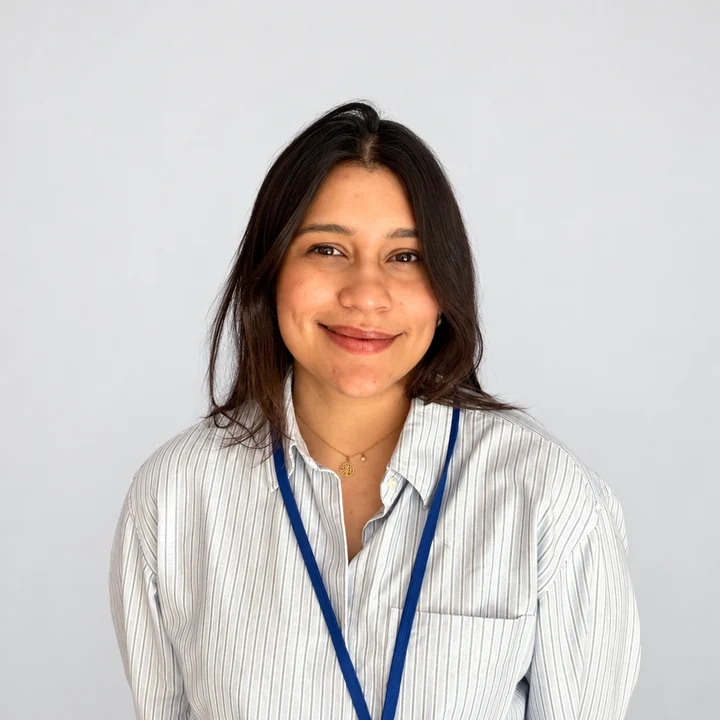
Meet María Camila

Introduction videoReserved space. Recording and approval pending.

Professional and academic experience

Comisión Oceanográfica Intergubernamental · UNESCO

June 2025–May 2026

  • Knowledge Management Consultant

Produced analytical synthesis and technical knowledge outputs for GEF International Waters; supported transboundary cooperation finance guidance, partner coordination and web-content improvements.

Comisión Oceanográfica Intergubernamental · UNESCO

October 2023–April 2025

  • Knowledge Management and Communications Consultant

Supported newsletters, Story Maps, CMS platforms and international conferences including IWC10, involving governments, UN agencies and technical partners.

COI de UNESCO · Resiliencia ante Tsunamis

March–September 2023

  • Trainee

Adapted hazard and coastal-science documents into user guidance; supported CoastWAVE and information platforms for different audiences.

Flanders Marine Institute · VLIZ

September 2021–August 2022

  • Thesis Researcher

Developed methods to assess micro- and nanoplastics, collected and analyzed data and contributed to findings published in Marine Pollution Bulletin.

Archipelagos Institute of Marine Conservation

July–September 2021

  • Marine Mammal Conservation Intern

Developed bioacoustic protocols and transects, took part in cetacean surveys and conducted statistical analysis of environmental and spatial data.

Experience connecting analysis and decisions

Knowledge for shared-water cooperation

The challengeTurning technical information from multiple partners into useful environmental-cooperation outputs.

Applied experienceAnalytical synthesis, output review and research support on sustainable financing mechanisms.

From ocean to atmosphere

The challengeStudying micro- and nanoplastic transfer and communicating pollution evidence.

Applied experienceExperimental research and statistical analysis associated with VLIZ and a 2023 scientific publication.

Areas of expertise

  • Water governance

    Transboundary cooperation and environmental knowledge management.

  • Science communication

    Evidence synthesis, guidance and accessible digital outputs.

  • Marine research

    Micro- and nanoplastics, statistical analysis and ocean–atmosphere processes.

  • Multilateral cooperation

    Partner coordination, deliverables and international meetings.

Academic education

  • MSc in Marine and Lacustrine Sciences and Management

    Vrije Universiteit Brussel · Ghent University · Universiteit Antwerpen · 2020–2022

  • Geology

    Universidad EAFIT · 2012–2017

Research and selected contributions

Her work connects emerging pollution, marine resources and access to knowledge. She served on the editorial team for the UNESCO IOC NEAMTWS 2030 strategy summary, an editorial contribution distinct from her scientific co-authorship on microplastics.

  • 2023

    Micro- and nanoplastics transfer from seawater to the atmosphere through aerosolization under controlled laboratory conditions

    Co-author · Marine Pollution Bulletin, 192, 115015.

    View contribution ↗
  • 2023

    NEAMTWS 2030 Strategy (summary)

    Editorial-team member · IOC Brochure 2023-2.

    View contribution ↗

Connecting knowledge, evidence and decisions

Experience connecting marine research, knowledge management and multilateral cooperation on water resources.

A professional perspective for examining problems, discussing assumptions and interpreting alternatives.

  • Science and decisions

    How can environmental evidence become useful information for resource management?

  • Cooperation

    How can institutions sharing a resource coordinate their priorities?

  • Emerging pollution

    What can and cannot be concluded from research data?

Explore our programs

Explore GAE graduate education and its applied approach.

View all master’s programs →

Related program

MSc in Sustainable Resource Management and Energy Transition

24 months · 42 credits · 100% online

Explore the program

Request information